
A Century of Exclusionary Housing and Education Policy
What policies and historical events have affected the wealth gap in Los Angeles over time?
This timeline serves as the historical backbone of the “LAyers” project, illustrating how housing policies, discriminatory real estate practices, and unequal public education funding in Los Angeles contributed to the development and persistence of the racial wealth gap over more than a century. As our project argues, inequality is produced by interconnected systems. This timeline maps the specific legal and political mechanisms that engineered these disparities.
Beginning with racially restrictive covenants in the early 1900s, many communities of color, particularly Black and Latine residents, were excluded from homeownership, which has historically been one of the primary pathways for wealth-building in the United States. Practices such as redlining, inflated rental pricing, and enforced residential segregation limited access to generational wealth, while many White households benefited from appreciating property values and government-backed home financing programs. This timeline traces how foundational assets for communities of colors were denied, creating a domino effect that eroded the tax base for public schools and solidified the segregated neighborhoods we analyze in our geospatial maps today. By understanding the century-long trajectory, we can see why current interventions like the 2017 TOC incentive are necessary attempts to reverse decades of structural exclusion.
1890s–1920s
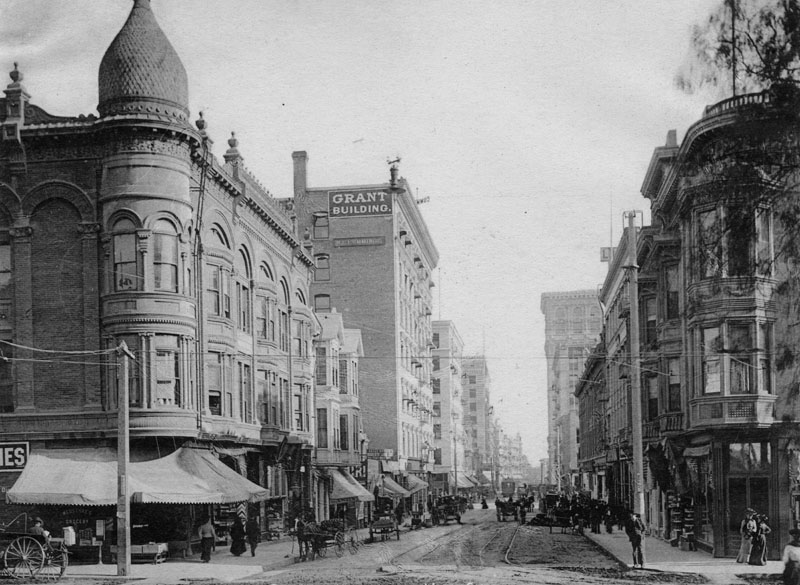
Racially restrictive covenants in Los Angeles
White residents and organizations such as the California Real Estate Association began implementing racially restrictive housing covenants, written agreements that excluded “alien races” and “non-Caucasians,” including African Americans, Asians, Latino, and Jewish people from purchasing or living in certain neighborhoods. These covenants became widespread throughout Los Angeles, institutionalizing residential segregation and preventing communities of color from building generational wealth through homeownership.
1930s-1940s
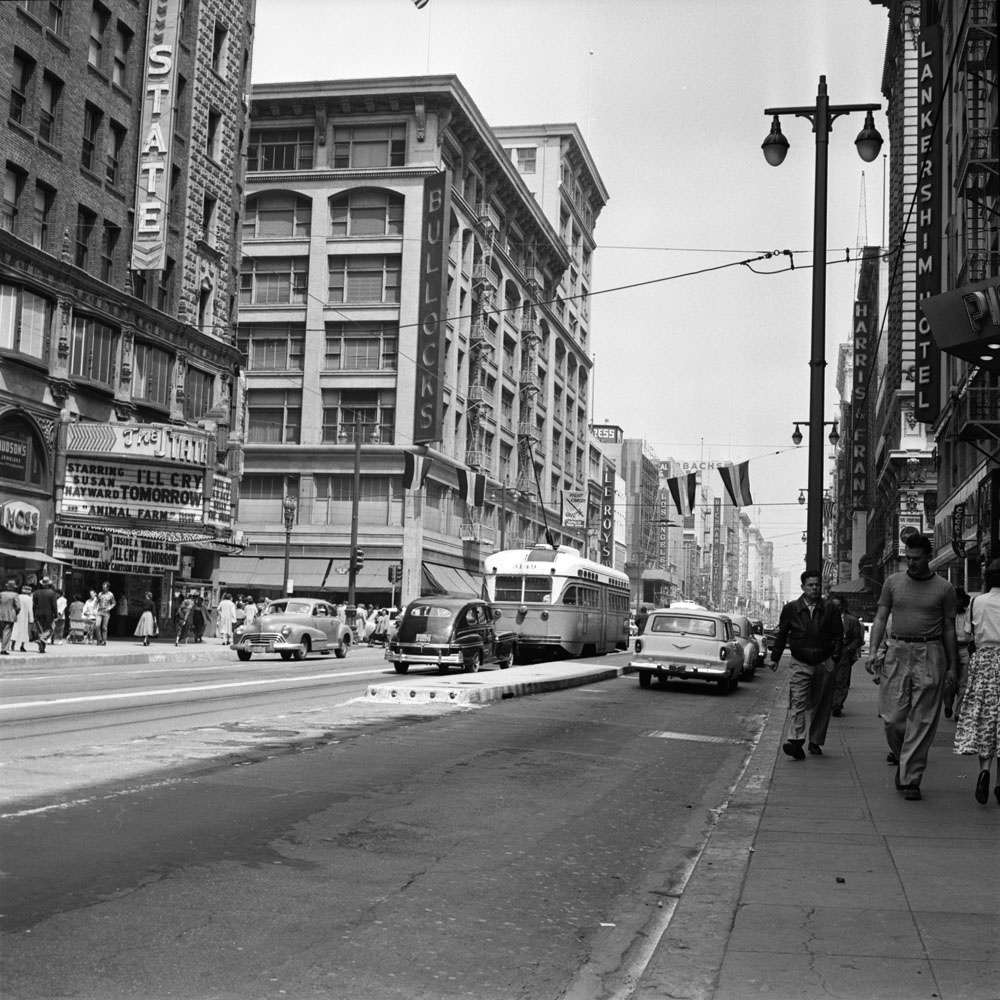
Housing crisis for African Americans in Los Angeles
The Los Angeles Urban League found that between 1950 and 1956, less than one percent of new housing was occupied by minorities. Restrictive covenants and racial discrimination confined African American residents to overcrowded, poorly maintained areas in South Los Angeles. The “Shenk Rule” allowed business owners to charge inflated rents to Black residents.
1948
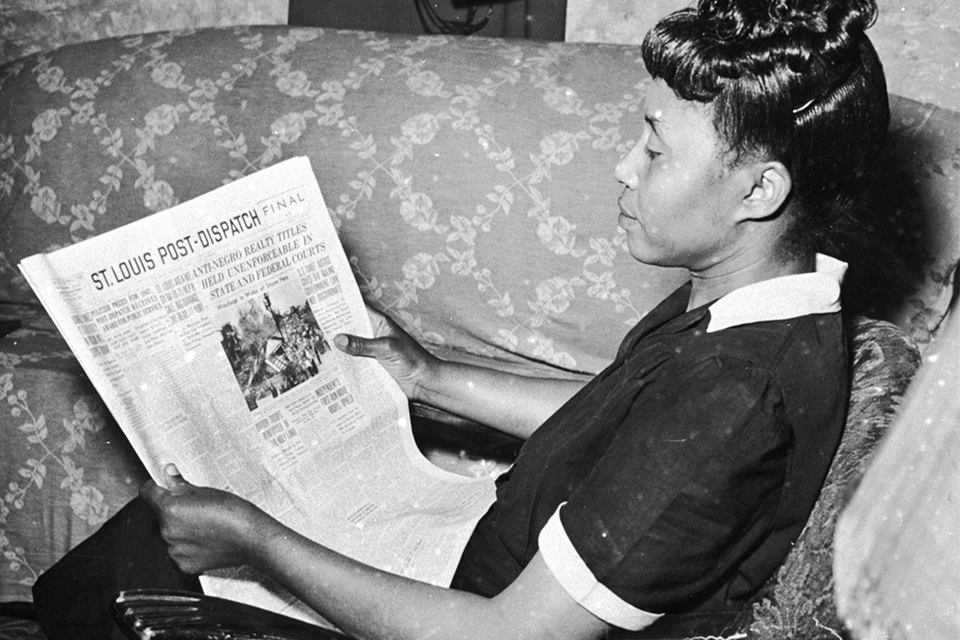
Shelley v. Kraemer
The U.S. Supreme Court ruled that racially restrictive covenants written into property deeds were unconstitutional and unenforceable under the Fourteenth Amendment. Though this decision was a legal victory, racially restrictive practices continued informally through discrimination by realtors, lenders, and homeowner associations throughout Los Angeles and other cities.
1950s-1960s
De Facto Segregation in Los Angeles Public Schools
While the official policy of the Los Angeles Board of Education was to assign students to schools based on residence without considering race, neighborhoods were already highly segregated due to housing discrimination and restrictive covenants. As a result, Los Angeles public schools became de facto segregated (segregated in practice, not by law). The isolation of Black residents in Los Angeles rose dramatically from 3.3 on the isolation index in 1890 to 70.3 by 1970. LAUSD faced segregation lawsuits beginning in the 1960s, yet the district became even more segregated by 1970 as white families moved to outlying areas.
June 6, 1978
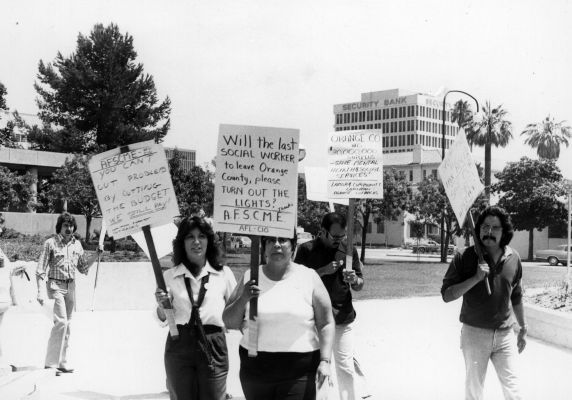
California Proposition 13 approved by voters
California voters approved Proposition 13 by nearly a two-to-one margin, capping property tax rates at 1 percent of assessed value (based on 1976 values). The measure drastically reduced property tax revenues available to local school districts. Proposition 13 shifted funding responsibility from local property taxes to the state, resulting in declining school funding for California relative to other states and leaving California with one of the lowest rates of per-pupil spending. Los Angeles schools faced renewed funding constraints.
2017
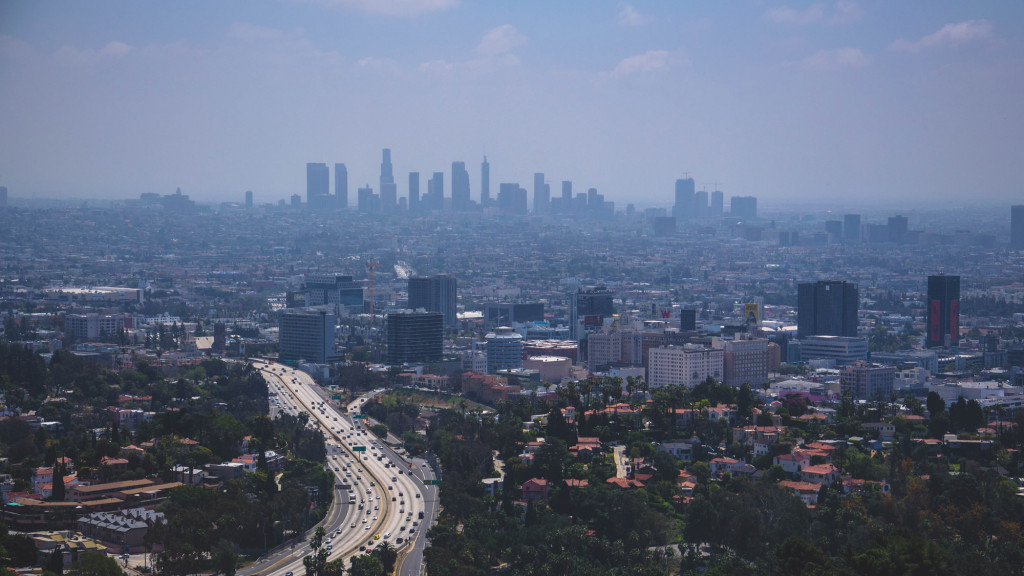
Los Angeles Transit Oriented Communities Incentive Created
The City of Los Angeles created the TOC Incentive Program, which incentivizes mixed-income and 100% affordable housing projects near public transportation. By 2024, the program had approved over 35,000 housing units, with almost 25% reserved as affordable—mostly for Extremely Low-Income (ELI) households earning up to 30% of the area median income ($35,450 or less annually for a family of four). This represented a major shift in Los Angeles’ approach to housing affordability, with private developers going from providing next to no affordable units prior to 2013 to having upwards of half of all permitted affordable units set aside as restricted affordable by 2021.
2024
Racial wealth gap reaches historic levels
Recent research from Duke University’s Samuel DuBois Cook Center for Social Equity revealed that the U.S. racial wealth gap is not shrinking but growing. Between 2019 and 2022, the Black-white median wealth gap increased 38 percent from $841,900 to $1.15 million—a rate that far outpaced inflation. In 2022, the median white household held $284,310 in wealth, more than six times that of the median Black household at $44,100 (an 85% wealth gap). For Hispanic households, the median was $62,120, representing a 78% wealth gap compared to white households.

This historical trajectory provides the necessary context for the economic realities observed in our contemporary analysis. The policies outlined above, from the Shenk Rule’s inflated rents to the funding vacuums created by Proposition 13, broke the intergenerational transmission of wealth for Black and Brown Angelenos. The result is a cumulative disadvantage that legal victories alone have failed to reverse. As noted in the 2024 Duke University data, the racial wealth gap is actually widening, a trend mirrored locally in Los Angeles.
Ultimately, this timeline demonstrates that layers of inequality in the United States are persistent. For instance, the Housing Act of 1968 outlawed discrimination, but did not undo the segregation that continues to define the city’s geography. The transition from explicit exclusion from restrictive covenants, to subtle economic exclusion through exclusionary zoning and funding disparities, confirms that “colorblind” policies are insufficient. As we move into the visualization section of our project, this history explains why our maps look the way they do; the dark blue concentrations of wealth and rent burden are the enduring effects of these century-old decisions.
Source Citations
[1] Race, Housing, and Civil Rights | CSUN University Library. https://library.csun.edu/bradley-center/instructional-resources/african-americans-la/housing-civil-rights.
[2] Jimenez-Castellanos, Oscar, and Lawrence O. Picus. “Serrano v. Priest 50th Anniversary: Origins, Impact and Future.” BYU Education & Law Journal, vol. 2021, no. 2, Mar. 2022, https://scholarsarchive.byu.edu/byu_elj/vol2021/iss2/2.
[3] Redlining in Los Angeles County. http://www.laalmanac.com/history/hi727.php.
[4] School Desegregation | CSUN University Library. https://library.csun.edu/bradley-center/instructional-resources/african-americans-la/school-desegregation.
[5] “Fair Housing.” Ventura County Coastal Association of REALTORS, https://vcrealtors.com/fair-housing/.
[6] “Civil Rights Act of 1968.” Wikipedia, 20 Nov. 2025. Wikipedia, https://en.wikipedia.org/w/index.php?title=Civil_Rights_Act_of_1968&oldid=1323271694.
[7] “1978 California Proposition 13.” Wikipedia, 16 Nov. 2025. Wikipedia, https://en.wikipedia.org/w/index.php?title=1978_California_Proposition_13&oldid=1322454035.
[8] https://www.lausd.org/cms/lib/CA01000043/Centricity/Domain/123/05_How%20Education%20is%20Funded%20in%20California.pdf
[9] How Los Angeles Got Serious About Housing | Los Angeles City Planning. https://planning.lacity.gov/blog/how-los-angeles-got-serious-about-housing.
[10] The Racial Wealth Gap 1992 to 2022 » NCRC. 30 Oct. 2024, https://ncrc.org/the-racial-wealth-gap-1992-to-2022/.
[1] https://www.fastcompany.com/3049263/these-beautiful-aerial-photos-of-la-show-what-income-inequality-looks-like-from-above
[2] https://waterandpower.org/Historical_DWP_Photo_Collection_LA_Public_Library/4th_and_Hill.jpg
[3] https://picryl.com/media/street-in-los-angeles-1956
[4] https://www.historynet.com/wp-content/uploads/2018/03/ETHEL-SHELLEY-960X640.jpg
[5] https://i.insider.com/5c9701add810d24fc47b6993?width=700&format=jpeg&auto=webp
[6] https://reuther.wayne.edu/files/images/LR002204.51.15.8.30459.preview.jpg
[7] https://static1.gensler.com/uploads/hero_element/13064/thumb_desktop/thumbs/LA-transit-oriented-communities-2000px_1547080101_1024x576.jpg
[8] https://ca-times.brightspotcdn.com/dims4/default/f344f0f/2147483647/strip/true/crop/6720×4480+0+0/resize/1200×800!/format/webp/quality/75/?url=https%3A%2F%2Fcalifornia-times-brightspot.s3.amazonaws.com%2Faf%2F96%2F5867d11c475d9d67b3c2f1f80a03%2F465019-me-0911-city-beat-sf-homeless-immersion-014-gem-jpg.jpg